Tokyo vs. Silicon Valley: Why Japan Leads Tech Education in 2026
2/14/2026
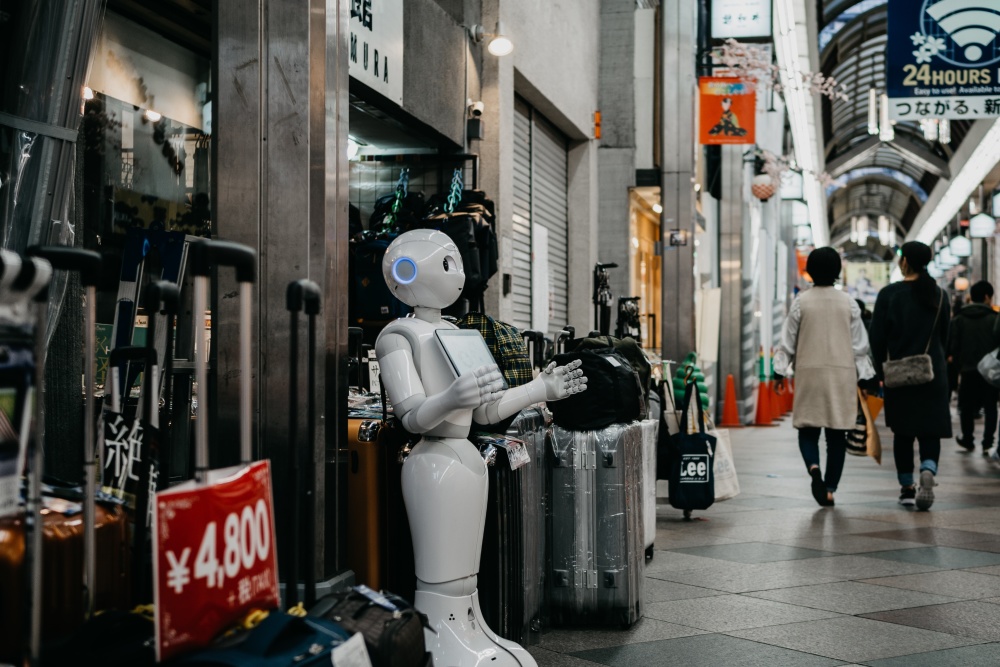
For decades, the path for any aspiring tech innovator was a straight line to Northern California. But as we move through 2026, the magnetic north of the tech world has shifted. Rising living costs, stagnant visa policies, and a "software-only" focus have caused Silicon Valley to lose its luster for the next generation of engineers.
In its place, Tokyo has emerged as the global epicenter for the "Hard Tech" revolution. For students pursuing degrees in Robotics and Artificial Intelligence, Japan is no longer just a destination for culture; it is the premier laboratory for the future of human-machine collaboration.
The Shift from "Bits" to "Atoms": The Rise of Physical AI

The primary reason Tokyo is outperforming Silicon Valley in 2026 is the global shift from purely digital AI to Embodied AI (or "Physical AI"). While Silicon Valley remains a leader in Large Language Models and "bits," Japan has spent the last decade perfecting the "atoms"—the physical bodies that AI inhabits.
In 2026, the industrial landscape has shifted fundamentally. Manufacturing leaders are moving away from "fenced-off" robotic arms toward intelligent, autonomous humanoids. Japanese universities like the University of Tokyo and Tohoku University are world leaders in this integration. They aren't just teaching students how to write code; they are teaching them how to build machines that perceive, understand, and navigate unstructured human environments. As industries move toward automated healthcare and precision manufacturing, the ability to build robots that can interact with the physical world is the most valuable skill set in the market.
A Case Study on 'Physical AI' and Humanoid Labor Trends in 2026
Government-Backed Innovation: Society 5.0 and the "Super-Smart" Society

In 2026, Japan’s "Society 5.0" initiative has reached full maturity. Unlike many Western nations where tech innovation is left entirely to the private sector, Japan has created a seamless pipeline between universities, the government, and industry giants like Sony, Toyota, and SoftBank.
Society 5.0 envisions a "Super-Smart Society" where cyberspace and physical space are highly integrated. For an international student, this means that your degree is not just theoretical. Most AI and Robotics programs in Tokyo now include mandatory internships and "Co-op" placements. You might find yourself working on a "Moonshot" project aimed at solving the aging population crisis or developing autonomous drone delivery systems for depopulated rural areas.
Official Japanese Cabinet Office Portal on Society 5.0 Strategies
The J-Find Visa: A Career Path Without the "Visa Lottery"

One of the biggest hurdles in Silicon Valley is the H-1B visa lottery, which has become increasingly volatile and competitive. Japan has countered this by introducing the J-Find Visa (Future Creation Individual Visa).
This policy allows graduates from top-ranked global universities (including bachelor’s and master’s students) to live in Japan for up to two years specifically to job hunt or start a company. Unlike traditional work visas, you don't need a job offer before you arrive. When you combine this with the J-Skip track—which fast-tracks permanent residency for high-income researchers and engineers—Japan is offering a guaranteed seat at the table of the new global economy.
The Economic Edge: Tokyo vs. Silicon Valley Living Costs

The math in 2026 simply doesn't favor the Bay Area. While a student in San Francisco might require over $8,700 per month to maintain a certain standard of living, that same standard can be achieved in Tokyo for roughly $4,900.
Specifically for students:
Rent: A central one-bedroom in San Francisco averages ~$3,200+, while in Tokyo, shared housing or student dorms can range from ¥40,000 to ¥80,000 ($270–$540 USD).
Tuition: Japanese national universities remain significantly more affordable than private US institutions, often paired with the prestigious MEXT Scholarship which covers full tuition and a monthly stipend.
Safety & Infrastructure: Tokyo consistently ranks as one of the world's safest cities with the most reliable high-speed rail network, reducing the hidden costs of car ownership and security.
A Detailed 2026 Student Budget Guide for Living in Japan
Conclusion
The "Japan Tech Renaissance" is more than just a trend; it is a structural realignment of where the world’s most important work is being done. As AI moves out of the screen and into our homes, hospitals, and factories, the specialized knowledge found in Tokyo’s lecture halls has become the most sought-after currency in the world.
For the student who wants to be at the forefront of the next industrial revolution, the choice is clear. Silicon Valley may have defined the internet era, but Tokyo is defining the era of intelligent machines.